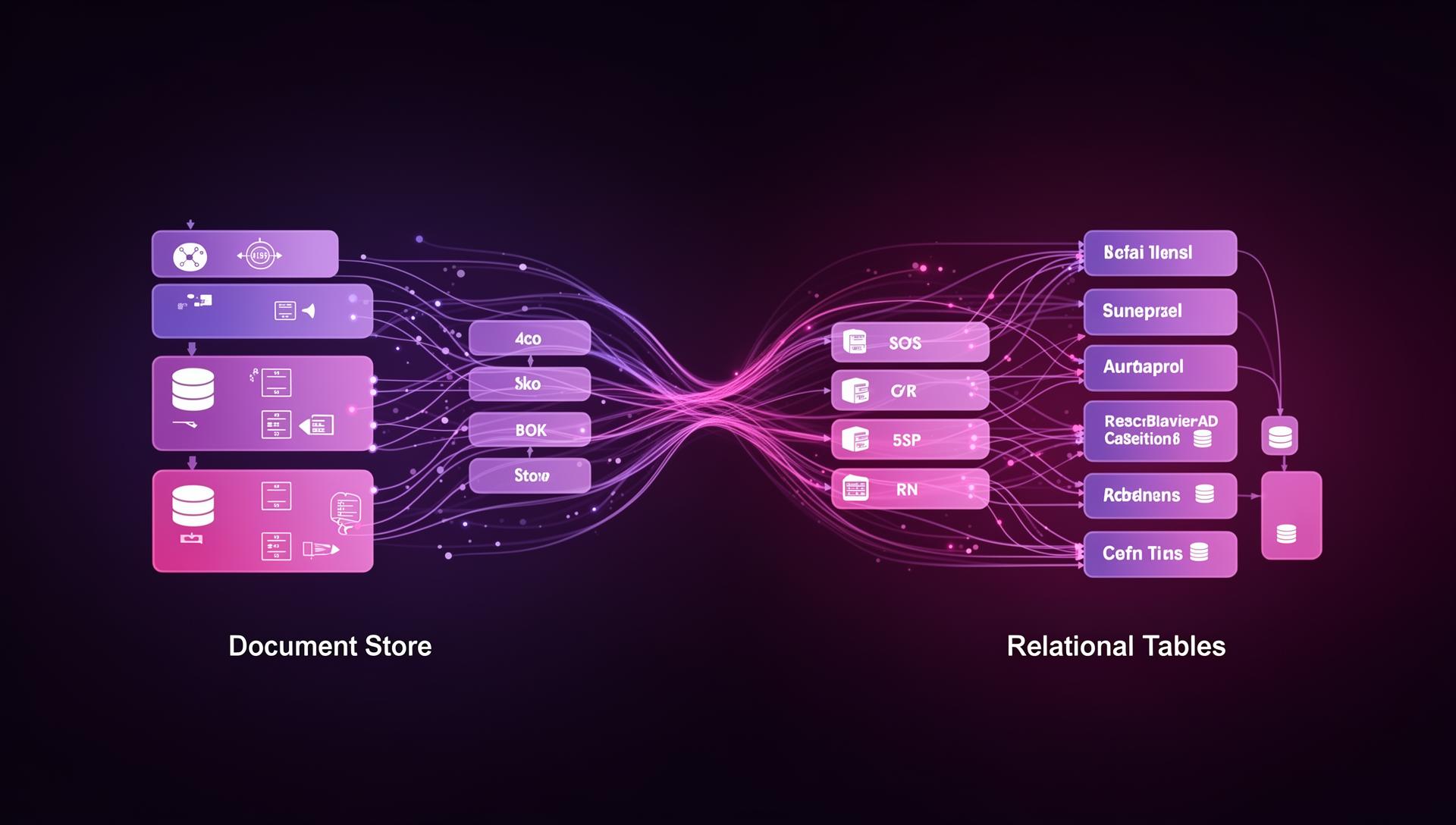
Key Takeaways
- MongoDB excels at rapidly evolving schemas and document-centric data
- PostgreSQL wins for complex relationships and ACID compliance
- The hybrid approach (both) is often the best answer for complex systems
- Match database strengths to your specific use case, not industry trends
The Eternal Debate
Every developer has been in this situation: starting a new project and needing to choose between MongoDB and PostgreSQL. After using both extensively in production, here's my practical guide.
Why This Matters
Choosing the wrong database can cost months of migration effort. This isn't about which is "better", it's about which fits your engineering requirements.
When MongoDB Shines
1. Rapidly Evolving Schemas
If your data model is still being figured out, MongoDB's flexibility is invaluable:
// Easy to add new fields without migrations
db.users.insertOne({
  name: "John",
  email: "john@example.com",
  preferences: {
    theme: "dark",
    notifications: true
  }
});
2. Document-Centric Data
When your data naturally forms documents (like articles, products with varying attributes, or user profiles), MongoDB's document model is intuitive.
3. Horizontal Scaling Needs
MongoDB's sharding capabilities make horizontal scaling more straightforward for read-heavy workloads.
When PostgreSQL Wins
1. Complex Relationships
When you have highly relational data with complex joins:
SELECT
  orders.id,
  customers.name,
  products.title,
  order_items.quantity
FROM orders
JOIN customers ON orders.customer_id = customers.id
JOIN order_items ON orders.id = order_items.order_id
JOIN products ON order_items.product_id = products.id
WHERE orders.created_at > NOW() - INTERVAL '30 days';
2. ACID Compliance is Critical
For financial applications, inventory management, or anywhere data integrity is paramount, PostgreSQL's ACID guarantees are essential.
3. Advanced Querying
PostgreSQL's support for window functions, CTEs, and full-text search makes complex analytics queries possible without additional tools.
Real-World Decision Matrix
| Scenario | Choice | Key Reason |
|---|---|---|
| E-commerce | PostgreSQL | ACID for orders & payments |
| CMS | MongoDB | Flexible content schemas |
| Analytics | PostgreSQL | Complex aggregations |
| Real-time Chat | MongoDB | High write throughput |
The Hybrid Approach
Sometimes the answer is "both." In our latest project, we use:
- PostgreSQL for user accounts, orders, and payments
- MongoDB for activity logs, user-generated content, and analytics events
Conclusion
There's no universal winner. The best database is the one that fits your specific use case.
💡 Strategic Insight
This isn't just technical knowledge, it's the kind of engineering thinking that separates production systems from toy projects. Apply these patterns to reduce costs, improve reliability, and ship faster.
Frequently Asked Questions
Yes, since v4.0 MongoDB supports multi-document ACID transactions, but PostgreSQL's transaction support is more mature and battle-tested.
MongoDB for rapid prototyping with evolving schemas. PostgreSQL if you know your data model and need complex queries from day one.
Tagged with
TL;DR
- MongoDB excels at rapidly evolving schemas and document-centric data
- PostgreSQL wins for complex relationships and ACID compliance
- The hybrid approach (both) is often the best answer for complex systems
- Match database strengths to your specific use case, not industry trends
Need help implementing this?
I help teams architect scalable systems, build AI-powered applications, and ship production-ready software.

Written by
Gaurav Garg
Full Stack & AI Developer · Building scalable systems
I write engineering breakdowns of major tech events, architecture deep dives, and practical guides based on real production experience. Every post is built from code, not theory.
7+
Articles
5+
Yrs Exp.
500+
Readers
Get tech breakdowns before everyone else
Engineering insights on AI, cloud, and modern architecture, delivered when it matters. No spam.
Join 500+ engineers. Unsubscribe anytime.
.webp)