.webp)
Key Takeaways
- Multi-region redundancy does not eliminate control plane dependencies
- Auto-scaling during outages can amplify cascading failures
- True resilience requires regional isolation, not just replication
- Design systems for degraded mode, not perfect uptime
- Chaos engineering is mandatory for serious cloud-native systems
Introduction
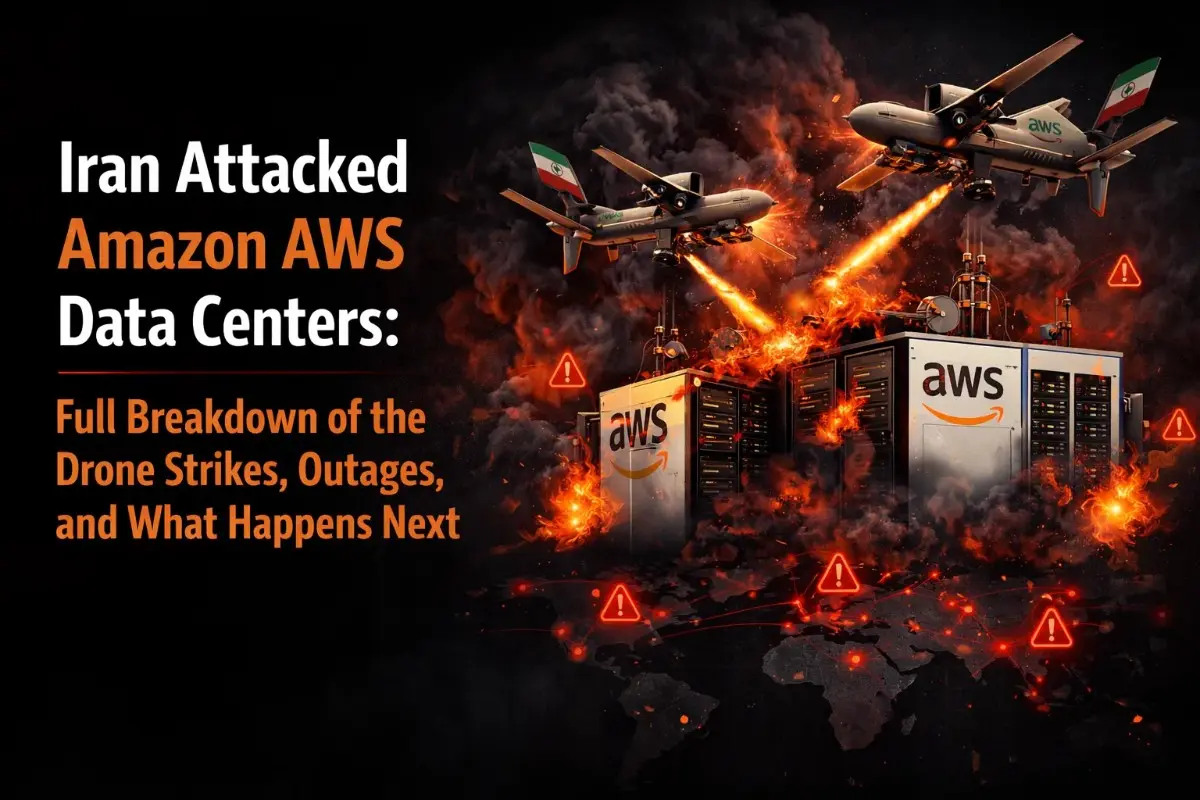
In March 2026, AWS experienced a global outage that impacted multiple regions and core services including EC2, RDS, Lambda, and S3 replication. Thousands of SaaS platforms, fintech systems, and enterprise applications reported downtime or severe performance degradation.
While AWS is known for high availability, this incident exposed architectural blind spots in modern cloud-native systems.
This article breaks down what failed, why multi-region redundancy wasn't enough, and how engineers should architect systems to survive future cloud-wide disruptions.
What Happened During the AWS Global Outage 2026?
Timeline Overview
- 02:14 UTC – Elevated API error rates in primary control plane.
- 02:27 UTC – EC2 instance launches fail in multiple regions.
- 02:42 UTC – RDS replication lag spikes.
- 03:10 UTC – S3 cross-region replication stalls.
- 04:30 UTC – Lambda execution failures increase.
- ~6 hours later – Gradual service recovery.
This was not an isolated service issue. It was a cascading control plane disruption.
The Core Failure: Control Plane Dependency
Many AWS services rely on centralized control plane components for:
- Provisioning infrastructure
- Scaling decisions
- Network configuration
- Metadata services
When control plane APIs degrade, even healthy data planes cannot scale or recover. This is where most architectures failed.
Why Multi-Region Didn't Fully Protect Systems
Many teams had active-passive setups, cross-region RDS replicas, and global load balancing, yet downtime still occurred. Because:
- Failover automation depended on AWS APIs
- IAM was a shared dependency
- DNS propagation caused delays
- Infrastructure-as-Code pipelines stalled
Redundancy without operational independence creates a false sense of safety.
Cascading Failure Pattern
Outage amplification typically follows this sequence:
- Service fails
- Autoscaling triggers
- Provisioning fails
- Retry storms begin
- Fallback region overloads
- Global degradation spreads
Retry loops and aggressive scaling often worsen outages.
Architectural Mistakes Exposed
1. Single Vendor Over-Consolidation
When compute, storage, messaging, and secrets are all tied to one cloud provider, your failure domain expands dramatically.
2. Over-Reliance on Managed Services
Managed services reduce operational burden but limit recovery control. If the provider's internal systems degrade, your recovery mechanisms degrade too.
3. No Chaos Testing
Most startups never simulate:
- Region failure
- API throttling
- IAM lockout
- Control plane unavailability
Resilience must be tested, not assumed.
How to Architect Against Future AWS Outages
1. True Regional Isolation
Design each region as an independent deployment unit:
- Separate IAM roles
- Independent scaling groups
- Isolated secrets
- Independent CI/CD pipelines
Avoid shared global dependencies wherever possible.
2. Reduce Control Plane Calls During Peak Traffic
Pre-provision buffer capacity. Do not rely on real-time autoscaling during high-risk windows.
3. Implement Circuit Breakers
Use exponential backoff, retry limits, fail-fast policies, and service isolation layers. Avoid infinite retry loops.
4. Graceful Degradation Mode
Instead of full crash:
- Enable read-only mode
- Serve cached content
- Queue writes temporarily
- Disable non-critical features
Degraded operation is better than total failure.
5. Selective Multi-Cloud Strategy
Full multi-cloud may be expensive. Instead, consider an independent CDN, backup database replication, and deployable fallback services. Diversify only critical components.
Key Engineering Lessons
- High availability is statistical, not guaranteed.
- Control plane dependencies are hidden risk multipliers.
- Autoscaling is not resilience.
- Isolation matters more than replication.
- Chaos engineering should be standard practice.
What This Means for Startups
If you're building on AWS:
- Assume outage inevitability.
- Design for failure first.
- Test failover quarterly.
- Document recovery procedures.
- Avoid tight coupling to vendor APIs.
Cloud providers offer infrastructure, resilience is still your responsibility.
Conclusion
The AWS Global Outage 2026 reinforced a fundamental truth in distributed systems: it's not about preventing failure. It's about surviving it.
Engineering maturity is measured by how systems behave under stress, not during normal operation. If you're building scalable systems and want to design production-grade resilience, architecting for failure should be your starting point, not your afterthought.
💡 Strategic Insight
This isn't just technical knowledge, it's the kind of engineering thinking that separates production systems from toy projects. Apply these patterns to reduce costs, improve reliability, and ship faster.
Frequently Asked Questions
The outage was triggered by control plane degradation that cascaded into EC2 provisioning, RDS replication, and cross-region services, leading to widespread service disruption.
Many systems rely on shared AWS services like IAM, Route 53, and control plane APIs. These shared dependencies create hidden single points of failure.
Not necessarily. AWS remains reliable overall. However, organizations should redesign architectures for isolation, resilience, and graceful degradation.
Tagged with
TL;DR
- Multi-region redundancy does not eliminate control plane dependencies
- Auto-scaling during outages can amplify cascading failures
- True resilience requires regional isolation, not just replication
- Design systems for degraded mode, not perfect uptime
- Chaos engineering is mandatory for serious cloud-native systems
Need help implementing this?
I help teams architect scalable systems, build AI-powered applications, and ship production-ready software.

Written by
Gaurav Garg
Full Stack & AI Developer · Building scalable systems
I write engineering breakdowns of major tech events, architecture deep dives, and practical guides based on real production experience. Every post is built from code, not theory.
7+
Articles
5+
Yrs Exp.
500+
Readers
Get tech breakdowns before everyone else
Engineering insights on AI, cloud, and modern architecture, delivered when it matters. No spam.
Join 500+ engineers. Unsubscribe anytime.