Key Takeaways
- RAG with hybrid search (semantic + keyword) outperforms pure vector search by 30%
- Structured output with Zod schemas eliminates 90% of LLM parsing errors
- Multi-agent systems need explicit state machines, not free-form chains
- LLM evaluation requires domain-specific metrics, not just generic benchmarks
- Cost optimization: Cache embeddings and use smaller models for classification tasks
The State of AI Engineering
2026 has moved AI from experimentation to production engineering. The challenge isn't "can we use AI?", it's "how do we build reliable, cost-effective AI systems?"
Why This Matters
Most AI projects fail not because the models are bad, but because the engineering around them is poor. This post covers patterns that actually work in production.
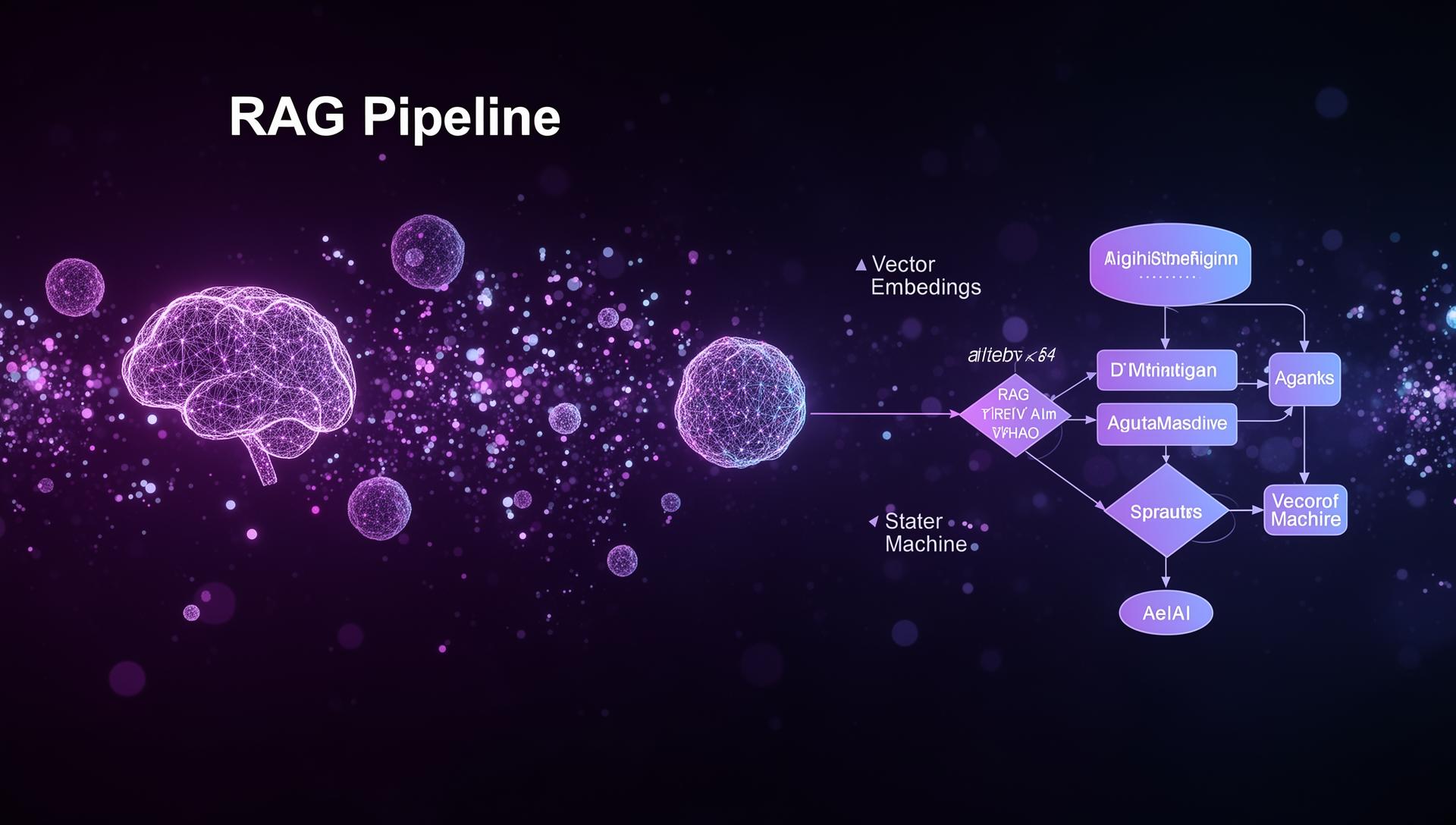
RAG Architecture That Works
The Hybrid Search Pattern
Pure vector search misses exact matches. Combine semantic and keyword search:
async function hybridSearch(query: string) {
  const [semanticResults, keywordResults] = await Promise.all([
    vectorStore.similaritySearch(query, 10),
    fullTextSearch(query, 10)
  ]);

  return reciprocalRankFusion(semanticResults, keywordResults);
}
Chunking Strategy
Document chunking makes or breaks RAG quality:
- Chunk size: 512–1024 tokens for most use cases
- Overlap: 10–20% prevents context loss at boundaries
- Semantic chunking: Split on paragraph/section boundaries, not arbitrary token counts
Agent Design Patterns
State Machine Agents
Free-form agent chains are unpredictable. Use explicit state machines:
type AgentState = "planning" | "researching" | "synthesizing" | "reviewing";

class StructuredAgent {
  private state: AgentState = "planning";

  async execute(task: string) {
    while (this.state !== "done") {
      switch (this.state) {
        case "planning": await this.plan(task); break;
        case "researching": await this.research(); break;
        case "synthesizing": await this.synthesize(); break;
        case "reviewing": await this.review(); break;
      }
    }
  }
}
Structured Output
Use Zod schemas to enforce LLM output structure:
const AnalysisSchema = z.object({
  sentiment: z.enum(["positive", "negative", "neutral"]),
  confidence: z.number().min(0).max(1),
  keyTopics: z.array(z.string()),
  summary: z.string().max(500)
});

const result = await llm.generate({
  prompt: "Analyze this feedback...",
  schema: AnalysisSchema
});
Key Takeaways
- RAG > Fine-tuning for most use cases, cheaper and faster to iterate
- Hybrid search outperforms pure vector search significantly
- State machines make agents predictable and debuggable
- Structured output eliminates parsing errors
- Evaluate with domain-specific metrics, not generic benchmarks
AI engineering is software engineering. Apply the same rigor to AI systems that you would to any production service.
💡 Strategic Insight
This isn't just technical knowledge, it's the kind of engineering thinking that separates production systems from toy projects. Apply these patterns to reduce costs, improve reliability, and ship faster.
Frequently Asked Questions
Depends on scale. Pinecone for managed simplicity, pgvector for PostgreSQL integration, Qdrant for self-hosted performance. For most startups, pgvector is sufficient.
Start with RAG, it's cheaper, faster to iterate, and doesn't require training infrastructure. Fine-tune only when RAG can't capture your domain's specialized patterns.
Cache frequent queries, use smaller models for simple tasks (classification, extraction), batch requests where possible, and implement semantic caching for similar queries.
Tagged with
TL;DR
- RAG with hybrid search (semantic + keyword) outperforms pure vector search by 30%
- Structured output with Zod schemas eliminates 90% of LLM parsing errors
- Multi-agent systems need explicit state machines, not free-form chains
- LLM evaluation requires domain-specific metrics, not just generic benchmarks
- Cost optimization: Cache embeddings and use smaller models for classification tasks
Need help implementing this?
I help teams architect scalable systems, build AI-powered applications, and ship production-ready software.

Written by
Gaurav Garg
Full Stack & AI Developer · Building scalable systems
I write engineering breakdowns of major tech events, architecture deep dives, and practical guides based on real production experience. Every post is built from code, not theory.
7+
Articles
5+
Yrs Exp.
500+
Readers
Get tech breakdowns before everyone else
Engineering insights on AI, cloud, and modern architecture, delivered when it matters. No spam.
Join 500+ engineers. Unsubscribe anytime.